
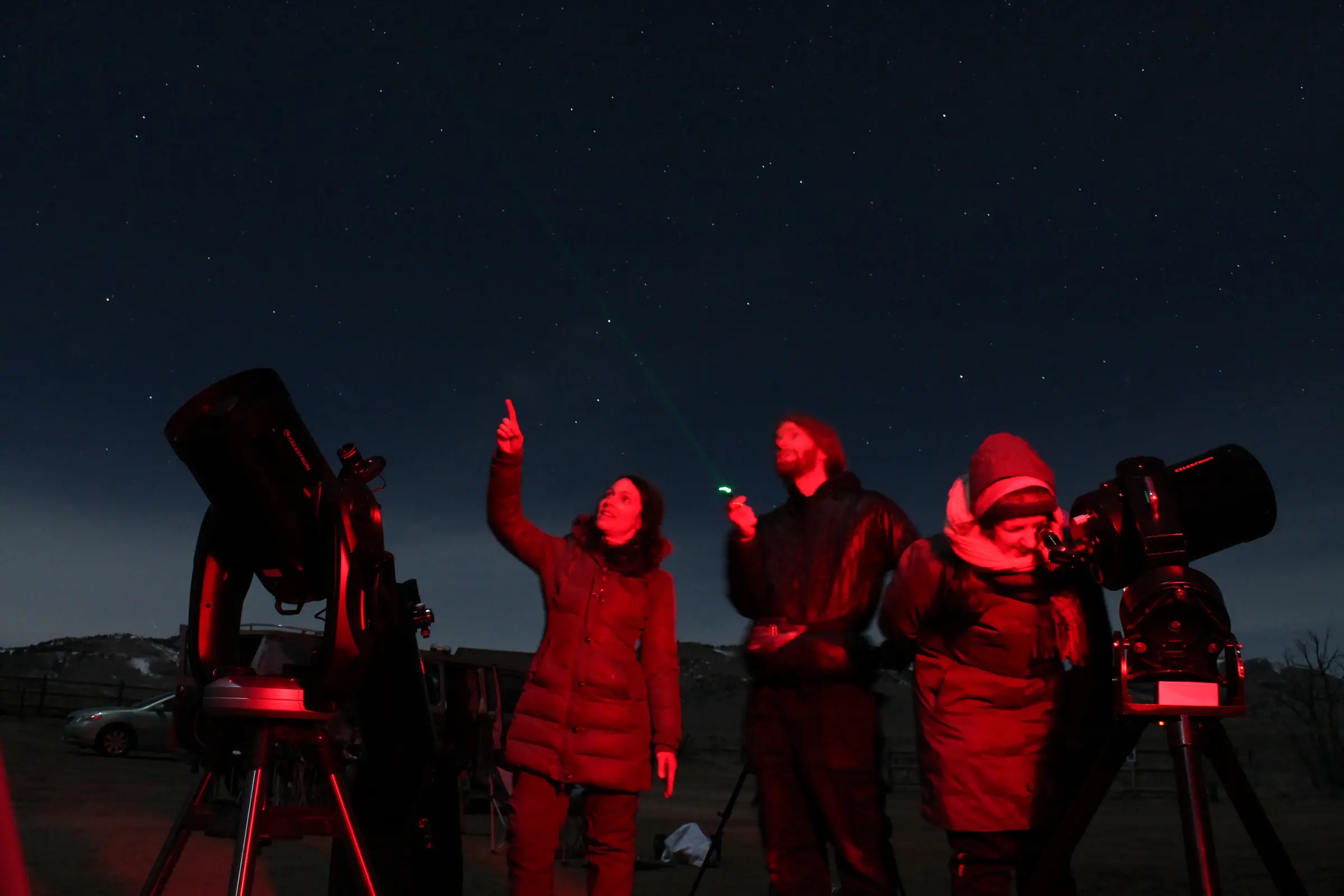
The most useful reading of the headline is not that 62 percent of travelers will book an astronomy trip. It is that darkness, interpretation and evening experiences have become credible ingredients in mainstream travel planning, strong enough for a destination to test with its own guests.
The sample is broad enough to matter
Booking.com commissioned an online survey of 27,713 adults in 33 countries and territories. Respondents had traveled for leisure in the previous year and planned to travel again within the next 12 to 24 months. The research ran in July and August 2024 as part of the company's 2025 travel predictions.
Within that sample, 62 percent said they would consider visiting destinations with darker skies. The value of this result is breadth. Interest in the night sky is not confined to members of astronomy clubs or people already shopping for telescopes. It appears within a large international group of active travelers.
Travelers described more than passive stargazing
The same research found interest in several forms of night-sky experience. Seventy-two percent identified starbathing, 59 percent showed interest in star guides, 59 percent in once-in-a-lifetime cosmic events and 57 percent in constellation tracking. Those responses describe a spectrum from quiet personal observation to guided and event-based products.
That distinction matters for destinations. A dark location is an asset, but a bookable program needs an experience structure. A guide, a clear duration, an accessible observing site and a story connected to the place can make the sky legible to visitors who would not identify as astronomers.
Heat and daylight patterns strengthen the evening case
Night programming can also solve a practical itinerary problem. Fifty-four percent of respondents said they planned to shift activities to nighttime to avoid rising daytime temperatures. Sixty-one percent planned to reduce time in direct sun, 57 percent expected to schedule activities in the evening or early morning and 42 percent were considering cooler destinations.
These figures do not prove that astronomy alone will move demand. They show that travelers are reconsidering when a destination experience should happen. An evening program can add a productive, cooler window after daytime recreation, conference sessions or dinner without competing for the same hours.
Lower-light accommodation joins experience with stewardship
Fifty-four percent said they would consider accommodation designed without lights that contribute to light pollution and that affect local flora and fauna. That creates a useful bridge between environmental practice and the guest proposition. Responsible lighting can improve the view, reduce wasted light and give staff a concrete conservation story to share.
The opportunity is strongest when these pieces reinforce one another: better lighting protects the resource, a guided program helps guests value it and the visitor experience gives the destination a reason to maintain the standard.
What the survey cannot decide for a destination
This is stated preference research, not booking data for a specific place. It cannot determine the right ticket price, the number of guests who will convert, the strongest season or whether a program should be public, private or included in a stay.
A destination should use the findings to justify a measured pilot. Track page views, inquiries, booking conversion, attendance, guest satisfaction, weather outcomes and any effect on food, beverage or overnight behavior. The global survey makes the question worth asking. Local operating data must provide the answer.
For destination teams
4 practical takeaways
- 01Treat 62 percent as a demand signal, not a sales forecast.
- 02Offer more than telescope access by designing guided, quiet and event-based formats.
- 03Position astronomy within the evening itinerary and climate strategy.
- 04Test conversion and operating performance with the destination's own guests.
References
Original sources
All percentages in this article come from Booking.com's published 2025 travel-predictions research. The survey measures stated traveler intentions. It does not report completed astronomy bookings or predict revenue for an individual destination.