
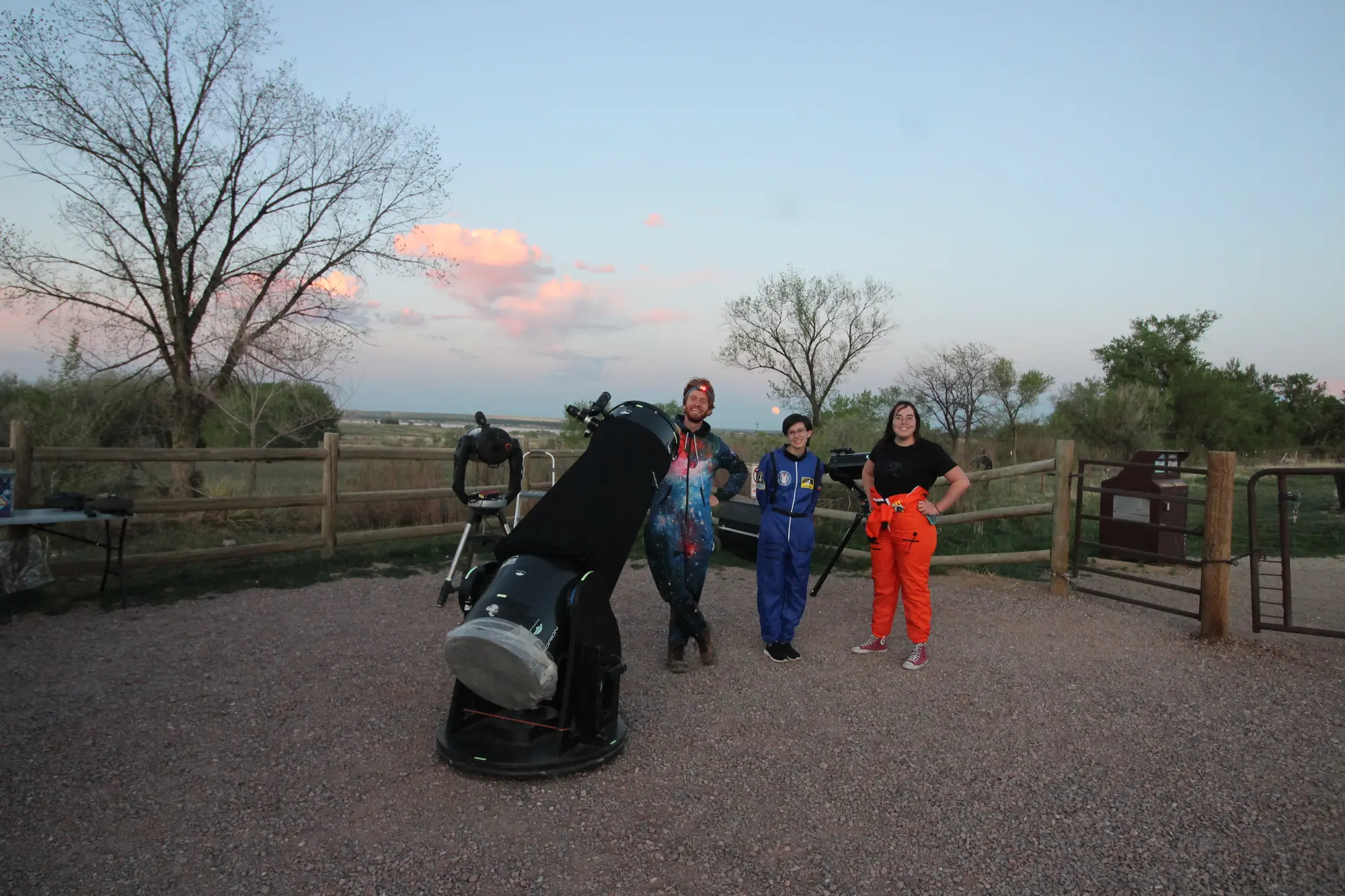
Georgetown's 2024 stargazing event did not ask the town to disguise itself as a remote observatory. It began at Strousse Park, then used the walk toward Rutherford Trail to move the group from the familiar town setting into a clearer relationship with the surrounding night.
The route created a beginning
Meeting in a recognizable central location reduced uncertainty. The group could gather before walking together to the observing area. That short transition helped the program feel like a shared experience rather than a collection of individuals trying to find a dark pullout after sunset.
A route also creates narrative space. Guides can discuss night vision, safe movement and what changes as local light falls behind the group.
A public program needs practical specificity
The event notice named the starting park, trail, hours, uneven ground and need for warm layers and sturdy shoes. Those details are essential when the program includes movement after dark. They allow guests to decide whether the experience suits them and arrive prepared.
The astronomy promise was broad but understandable: professional astronomers, large telescopes, constellations, navigation, planets, nebulae and galaxies when conditions allowed.
Free events can reveal future demand
A community star party can serve education and placemaking while also giving a destination useful evidence. Questions, attendance patterns, dwell time and repeat interest can help determine whether the next step should be another public event, a ticketed series, a school program or a visitor package.
The pilot should therefore be documented. Count participation, record common questions, note equipment bottlenecks and capture the weather decision. Free does not have to mean unmeasured.
The destination lesson
Use the geography of the place. A short walk, overlook or transition from town to darker ground can create meaning, provided access, safety and alternatives are designed from the beginning.
For other destinations
4 lessons from the work
- 01Choose a meeting point visitors can recognize before dark.
- 02Publish terrain and clothing requirements clearly.
- 03Use the movement to support interpretation and anticipation.
- 04Measure a free pilot so it can inform the next program decision.
References
Original sources
AstroTours' public announcement documents the date, route, time, accessibility considerations and planned astronomy content for the Georgetown event.